
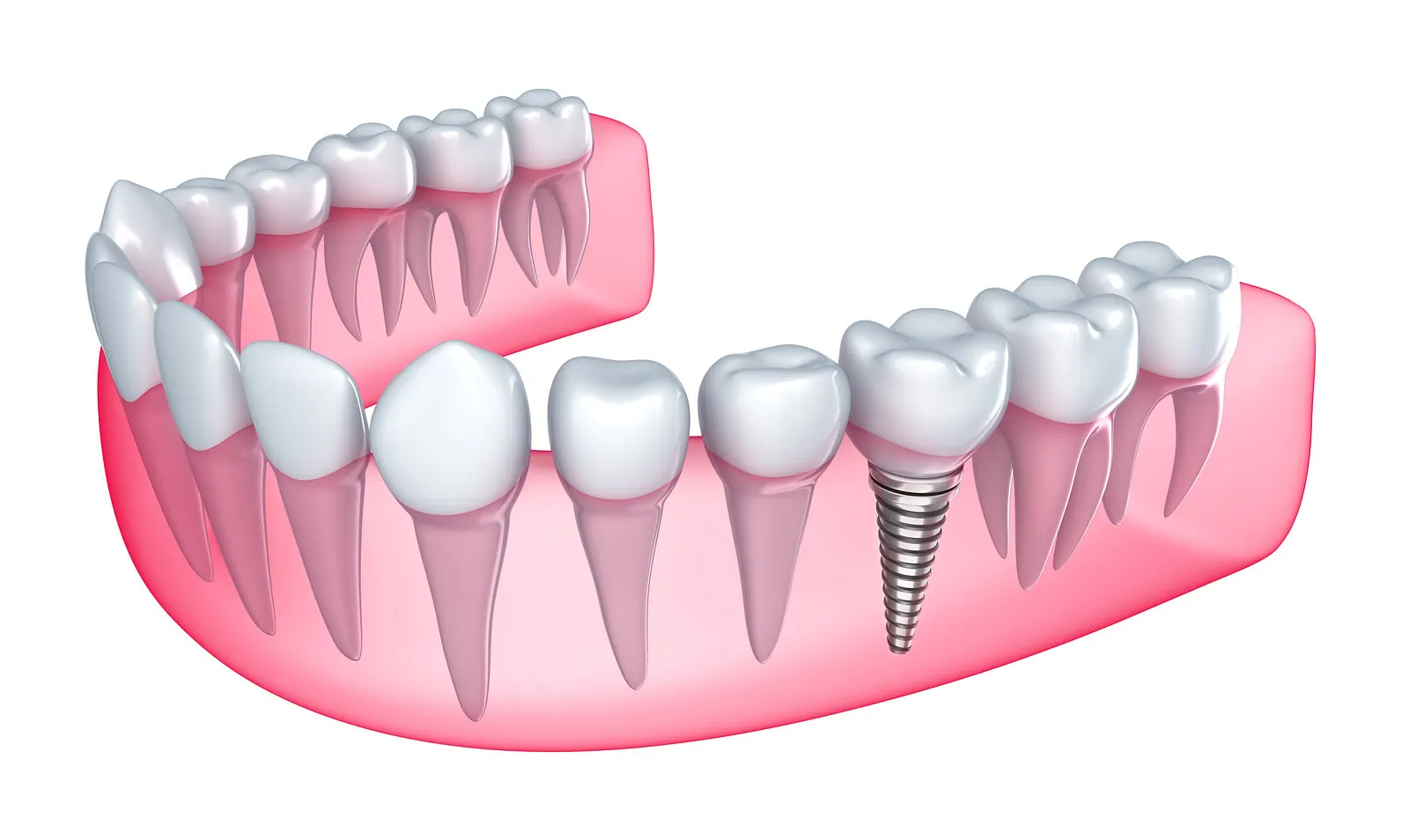
What is a dental implant?
A dental implant is an artificial tooth root, usually made of titanium, that is placed in the jawbone to support a replacement tooth. Healthdirect describes it as a metal screw used in place of the root of a missing tooth (healthdirect). Zirconia, a tooth-coloured ceramic, is an alternative implant material in some situations.
An implant restoration has three parts:
- Implant: the post placed in the jawbone, which the bone grows around.
- Abutment: a connector that attaches to the implant and supports the crown.
- Crown: the visible replacement tooth, made to match your other teeth.
Implants can also support a bridge or hold a denture in place when several teeth are missing.
Who is suitable for dental implants?
Dental implants may suit adults who have lost one or more teeth and have enough healthy jawbone, healthy gums and good general health. Not everyone can have an implant (teeth.org.au).
Healthdirect notes that factors such as smoking, diabetes, gum disease, osteoporosis, bleeding disorders, cancer treatment and older age can increase the chance of complications (healthdirect). That doesn’t always rule an implant out, but it affects the risks your dentist will discuss with you.
How is implant treatment planned at AMK Dental Clinic?
Implant treatment at AMK Dental Clinic is planned using an examination, your medical history and 3D imaging. A cone beam CT (CBCT) scan is a type of 3D X-ray that shows the height and width of the bone and the position of nerves and sinuses. Where a scan is needed, we will explain where it is taken.
Using the scan, your dentist plans the implant’s size, angle and position. Where suitable, this plan can be used to make a surgical guide that helps place the implant in the planned position. Who performs each stage of your treatment will be confirmed at your assessment.
What are the stages of dental implant treatment?
Dental implant treatment usually happens in stages over several months:
- Assessment and planning. Examination, X-rays, CBCT scan, discussion of options, risks and costs, and a written quote.
- Tooth removal and healing (if needed). If the tooth is still present, it is removed and the site may be left to heal first.
- Bone grafting (if needed). Extra bone or bone substitute is added where there isn’t enough to support an implant.
- Implant placement. The implant is placed in the jawbone under local anaesthetic.
- Integration. The bone grows around the implant, which usually takes about three months (healthdirect).
- Abutment and crown. A scan or impression is taken, and the abutment and crown are fitted.
- Maintenance. Daily cleaning and regular check-ups help monitor the gum and bone around the implant.
Will I need a bone graft?
Some people need a bone graft, and your CBCT scan helps show whether you do. Jawbone can shrink after a tooth is lost, and an implant needs enough bone around it to be stable. Grafting adds cost, healing time and its own surgical risks, so it is discussed and included in your quote before you decide.
What are the risks of dental implants?
Dental implant treatment involves surgery, and complications can occur. Risks include:
- Infection around the implant after surgery.
- Nerve injury, which can cause tingling or numbness of the lip, chin or tongue that is occasionally long-lasting.
- Sinus problems when implants are placed in the upper back jaw.
- Damage to neighbouring teeth.
- Implant failure, where the implant does not bond with the bone or later becomes loose and needs removing.
- Peri-implantitis, a gum infection around an implant that can cause bone loss and, if untreated, implant failure (teeth.org.au).
Swelling, bruising and discomfort are common for several days after surgery.
Implant, bridge or denture: how do they compare?
An implant, a bridge and a denture can each replace missing teeth, and the right choice depends on your mouth, health and budget (teeth.org.au).
| Dental implant | Fixed bridge | Removable denture | |
|---|---|---|---|
| Surgery needed | Yes | No | No |
| Effect on neighbouring teeth | None prepared | Teeth either side are filed down | Clasps may rest on other teeth |
| Typical treatment time | Several months | Usually a few weeks | Usually a few weeks |
| Removable | No | No | Yes |
| Main risks | Surgical complications, implant failure, peri-implantitis | Decay or failure of supporting teeth | Sore spots, movement, bone shrinkage over time |
| Relative cost | Usually highest | Moderate | Usually lowest |
| Maintenance | Daily cleaning and check-ups | Cleaning under the bridge | Daily cleaning; relines or replacement over time |
How much do dental implants cost, and will my health fund help?
The cost of dental implants varies, and AMK Dental Clinic provides an itemised written quote after your assessment. Healthdirect notes that implants can be expensive and suggests asking for item numbers so you can compare (healthdirect).
Implants are usually claimed under major dental on health fund extras cover. Benefits, annual limits and waiting periods vary by fund and policy, so check with your fund using the item numbers on your quote. Some DVA card holders may be eligible for support. See fees and health funds for payment options.
Common questions
How much do dental implants cost in Sydney?
The cost of a dental implant varies with the number of implants, whether bone grafting is needed, the type of crown and the imaging required. Because of this, AMK Dental Clinic gives you an itemised written quote after your assessment rather than a single set price. The quote lists ADA item numbers, so you can check with your health fund how much of the cost your policy may cover.
How long does dental implant treatment take?
Dental implant treatment usually takes several months from assessment to final crown. After the implant is placed, the bone generally needs about three months to grow around it before the crown is attached. Treatment takes longer if a tooth needs removing and the site needs to heal first, or if bone grafting is needed. Your dentist will give you an estimated timeline after your assessment.
Does getting a dental implant hurt?
Implant surgery is done under local anaesthetic, so the area is numb during the procedure, although you may feel pressure. Once the anaesthetic wears off, tenderness, swelling and bruising are common for several days, and pain relief is usually recommended. Everyone recovers differently. Your dentist will explain what to expect, how to care for the area and when to call us.
Am I suitable for a dental implant?
Suitability for a dental implant depends on having enough healthy jawbone, healthy gums and general health that supports healing. Smoking, uncontrolled diabetes, active gum disease, some medications and some medical conditions can increase the risk of complications or implant failure. An examination, medical history review and 3D imaging help your dentist decide whether an implant is a reasonable option for you.
Will I need a bone graft before an implant?
Some people need a bone graft before or during implant placement, but not everyone. Bone in the jaw can shrink after a tooth is lost, and an implant needs enough bone around it to be stable. If the 3D scan shows too little bone, your dentist may recommend grafting, which adds cost and healing time. You will know whether grafting is likely before you agree to treatment.
Is a dental implant better than a bridge?
Neither an implant nor a bridge is right for everyone. An implant replaces a tooth without preparing the neighbouring teeth, but it involves surgery and a longer treatment time. A bridge is usually faster and involves no surgery, but the teeth on either side are filed down to hold it. Your dentist will compare the options, risks and costs for your situation.